Legacy Lagoon
What Is a Trust?
Grantors, trustees and beneficiaries: how trusts and wills help families plan ahead, and why trust law varies by state.
🔒 All-AccessJunior 4+Explorer 8+Advanced 13+14 min✓ Completed
Planet 10 of 10
Learn how families plan ahead: wills, trusts, trustees, beneficiaries, inheritance and why the rules differ from state to state.
Your guide: Professor Ledger
Legacy Lagoon is the Wealthonauts planet about planning ahead. Professor Ledger answers a question many families wonder about: what is a trust? For kids, the idea is simple. A trust is a set of written instructions for who manages money or property, and for whose benefit.
In a trust, a person called the grantor (also called the settlor) puts money or property into the trust. A trustee manages it and must follow the trust’s instructions. The people the trust helps are the beneficiaries. The trustee has a legal duty to act in the beneficiaries’ best interest.

A will is a document that says who receives property after someone dies. Usually, a will goes through a court process called probate. A living trust, on the other hand, can start working right away. As a result, property that is properly placed in a living trust may avoid probate.
Families use trusts for many reasons. For example, a trust can hold money for children until they are old enough to manage it, keep family matters private or support a family member with special needs. Trust law is set mostly by states, so rules differ. Adults should work with a qualified estate-planning attorney.
Begin with the lesson What Is a Trust?, then connect the ideas to ownership on Property Planet.
Legacy Lagoon
Grantors, trustees and beneficiaries: how trusts and wills help families plan ahead, and why trust law varies by state.
🔒 All-AccessJunior 4+Explorer 8+Advanced 13+14 min✓ Completed
 Level 1 free
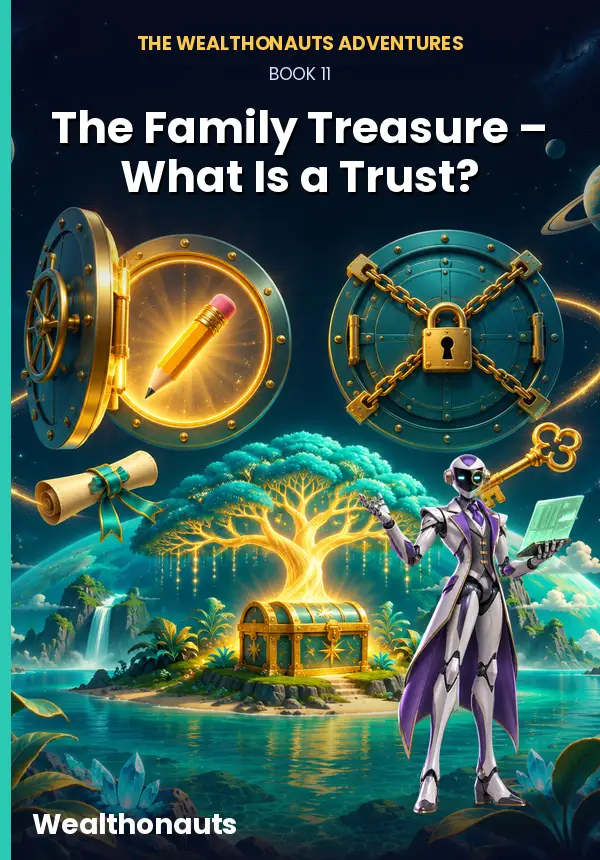
Book 11 · Ages 10+
Revocable and irrevocable trusts, trustees and beneficiaries explained
eBook available now